
What Branding Really Is (And Why It Matters)
Branding is often explained in pieces — logos here, colors there, social media somewhere in between. For someone new to branding, that fragmented explanation creates confusion.
At its core, branding is not decoration. It is communication.
Branding scholar Marty Neumeier defines a brand as “a person’s gut feeling about a product, service, or company.” That matters because it places branding in perception, not visuals. A brand exists whether or not you intentionally design it — because people are always forming impressions.
This guide breaks branding down from the ground up using research-backed principles and clear examples, without assuming prior knowledge.
Branding vs. Marketing: An Important Distinction
Marketing is what you say about your business.
Branding is what people come to believe about it.
Research in behavioral psychology shows that people make decisions emotionally first, then justify them logically. Branding shapes those emotional shortcuts.
When someone encounters your business, their brain is quietly asking:
- Do I understand this?
- Do I trust this?
- Does this feel right for me?
Your brand answers those questions before conscious evaluation begins.
How Brands Are Formed: Patterns and Perception
A brand is built through repeated signals.
This process is supported by research in cognitive psychology known as schema formation — the way humans recognize patterns and assign meaning over time.
In branding, those signals include:
- Visual choices
- Language and tone
- Consistency of behavior
- Repetition across touchpoints
When these elements align, people experience clarity. When they conflict, people feel friction — even if they can’t explain why.
Brand Voice and Messaging: How You Sound and What You Say
Brand voice and brand messaging work together.
Brand voice is how your business sounds — the tone, personality, and rhythm behind your words.
Brand messaging is what you choose to say — and repeat — to help people understand you.
Linguistic research shows that people assign personality traits to language almost instantly. Inconsistent voice creates uncertainty. Clear, steady voice builds familiarity.
Strong messaging respects cognitive limits. Research on cognitive load shows that too much information reduces comprehension.
Effective messaging:
- States what you do simply
- Clarifies who it’s for
- Repeats key ideas consistently
You do not need to say everything. You need to say the right things well.
Brand Clarity: Three Questions to Start With
If branding still feels abstract, start here.
These questions are not meant to be answered perfectly. They’re meant to slow you down and create direction.
1. What do I want people to understand first about what I offer?
Not everything — just the first, clearest thing. If someone only remembers one idea after encountering your brand, what should it be?
2. Who is this actually for right now?
Not everyone who could benefit — but the people you most want to serve today. Clarity here makes every other decision easier.
3. How do I want this to feel to someone encountering it for the first time?
Calm, supportive, confident, straightforward, refined. Feelings guide perception long before details do.
You don’t need polished language. Simple, honest answers are enough.

Visual Identity: How Design Communicates Before Words
The brain processes visuals faster than text.
Studies in visual cognition show that people form impressions of visual environments in milliseconds. Color, spacing, contrast, and hierarchy all influence perceived credibility.
Minimal visual systems are especially effective for beginners because they reduce cognitive effort.
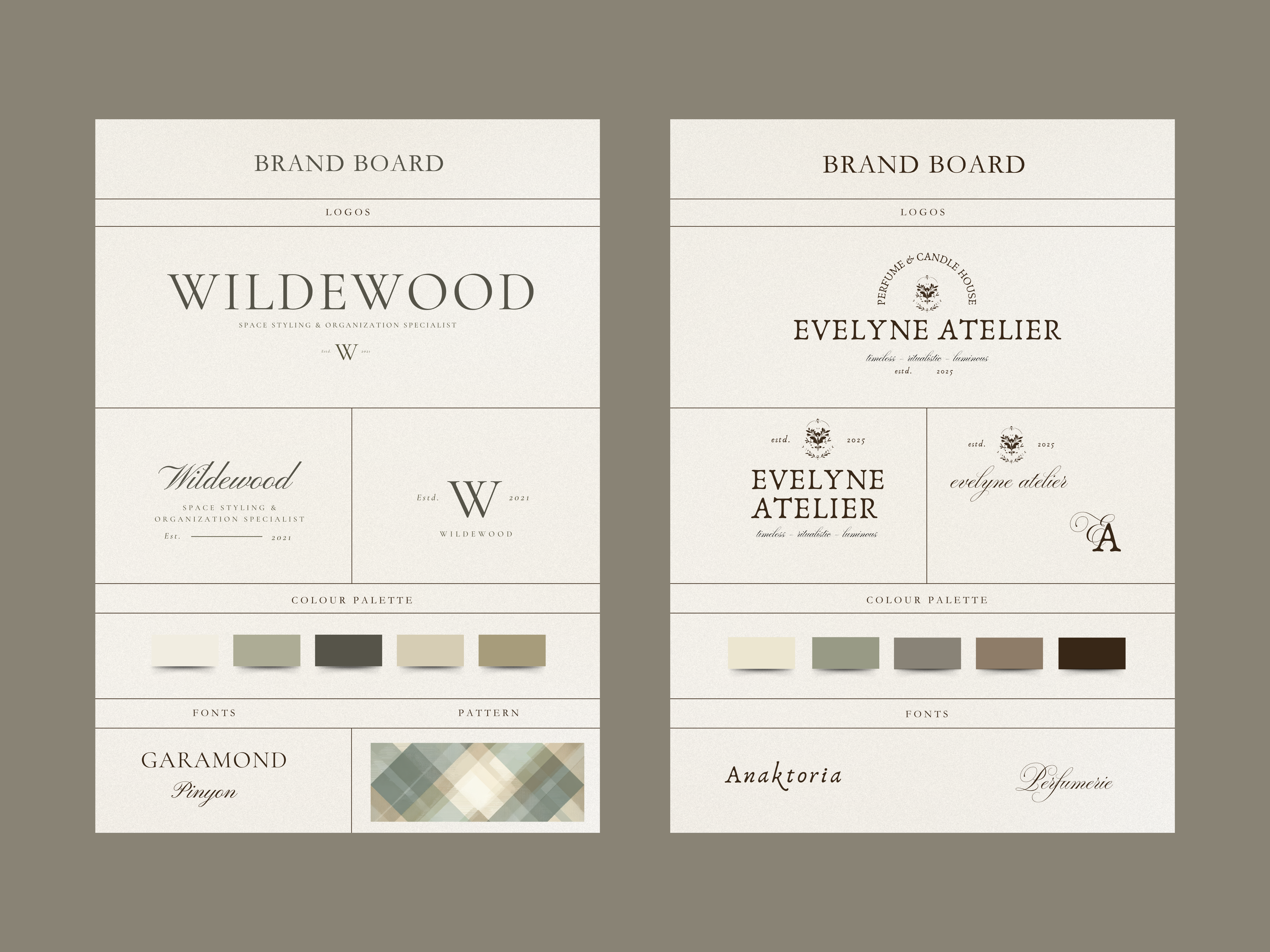
Strong visual identities tend to rely on:
- Limited color palettes
- Simple, readable typography
- Clear layout structure
- Consistent use of space
Minimal does not mean empty. It means intentional.
Consistency: The Trust Multiplier
Trust research consistently shows that predictability increases perceived reliability.
In branding, consistency means:
- The same tone across platforms
- The same visual language everywhere
- The same core message over time
Consistency does not limit creativity. It strengthens recognition.
Why Minimal Branding Works
Minimal branding removes distraction.
Decision fatigue — a well-documented psychological phenomenon — makes it harder for people to feel confident when faced with too many choices.
Minimal branding:
- Reduces visual noise
- Clarifies meaning
- Makes patterns easier to recognize
This is why restraint often feels more confident than excess.
Branding Is Built Through Clarity, Not Perfection
Many beginners delay branding because they believe they need the final answer.
Research in learning and behavior change shows the opposite. Clarity improves through iteration.
Strong brands are not built all at once. They are built through clear decisions, repeated consistently, and refined over time.

How to Start Building Your Brand
Begin with a few foundational questions:
- What do I offer?
- Who is it for?
- How do I want to be perceived?
These answers guide every future decision.
To make this process easier, I’ve created a simple 7-page brand worksheet designed to turn abstract ideas into clear, usable answers.
–>>> [Download the Brand Worksheets Workbook]
Brand clarity isn’t something you stumble into.
It’s something you build — one clear decision at a time.
